Interview with Megan Gamerman, MS, LDN
As part of providing resources to folks interested in learning more about different practitioners and types of therapy, I’m excited to highlight the work and resources of colleagues in the field whom I’ve worked with or know personally.
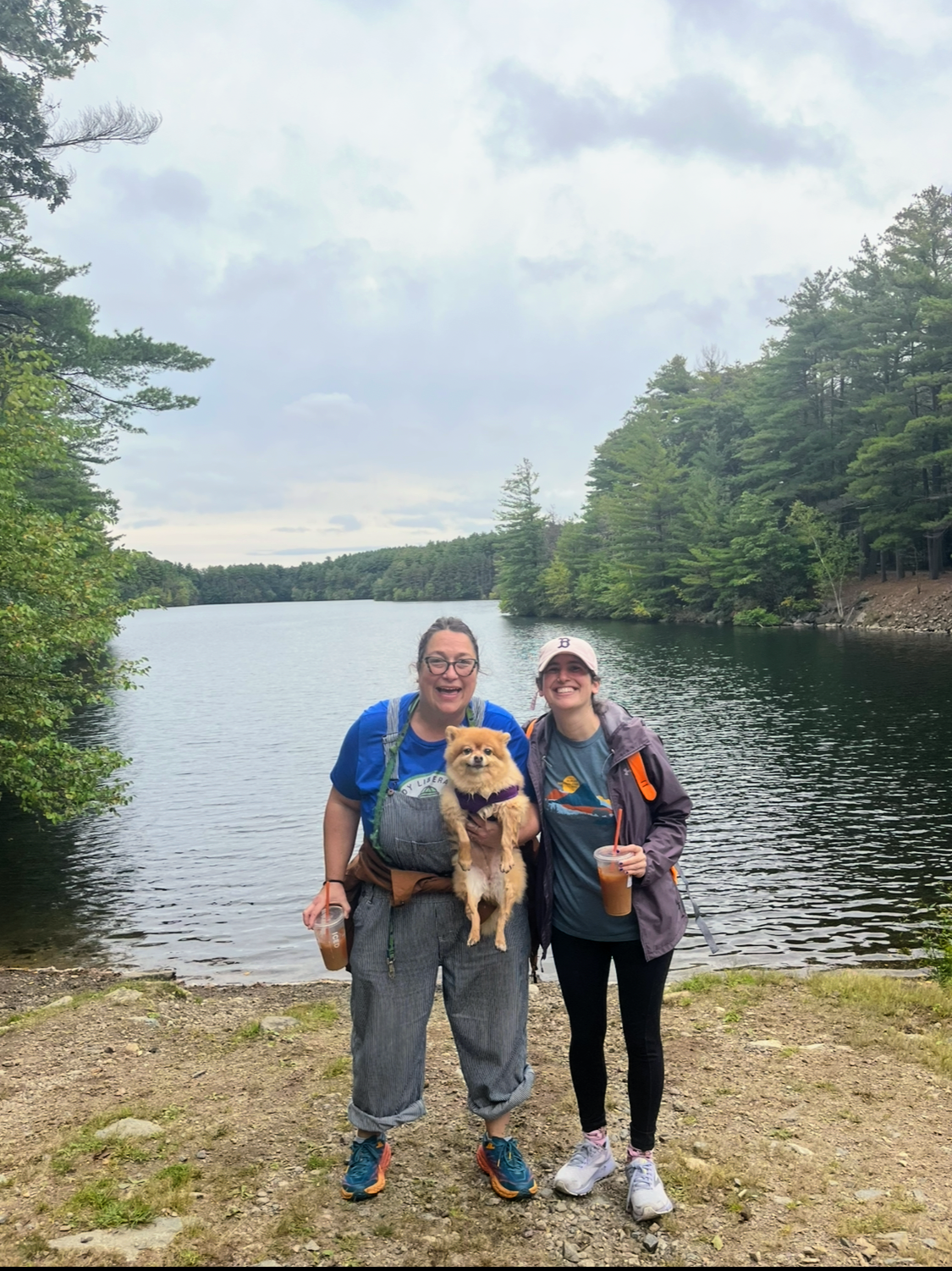
Megan Gamerman, Peaches, and me on a hike circa Fall 2023
Megan Gamerman, MS, LDN (she/her) is a Licensed Dietitian practicing in Massachusetts. We met in 2020 while working at a residential center for individuals with eating disorders in the Boston area. Megan has taught me so much about nutrition, diet culture, and health at every size. I have continued to go to her for insight and consultation.
Megan currently works at Metrowest Nutrition and Therapy. To learn more or work with Megan check out her website here: https://metrowestnutrition.com/our-team/megan-gamerman/
Rachel: Hi Megan, thank you so much for taking the time to share with me and my readers about your and your work. Could you share with us about what led you to get into nutrition and dietetics?
Megan: Thank You for asking!
There were many paths that led me to the field of nutrition and dietetics. I knew early on that I wanted to support people in a meaningful way, and while studying and working in social work, I repeatedly heard stories that highlighted the complex relationship people have with food and their bodies. Through these experiences, I began learning more about eating disorders and the very real dangers they pose.
This period also coincided with the late 1990s and early 2000s—a time dominated by cultural influences like The Biggest Loser and the “heroin chic” aesthetic. I wanted a deeper understanding of how our society arrived at that point and how those messages shaped our relationship with food and body image.
While disordered eating and eating disorders are not the same, the body responds similarly in both situations: it perceives famine and shifts into survival mode.
Having worked in restaurants for nearly 20 years, I developed a deep appreciation for the community, culture, and connection that humans share around meals. I wanted to build a career centered on something I truly loved. Why is the one thing all humans need to survive—food—so often entangled with guilt and shame?
Rachel: What are some of the most common challenges your clients face? How do you help clients achieve their goals?
Megan: I believe the greatest challenge is pushing back against a system that profits from body hate. We stop celebrating body diversity shortly after birth, and our natural ability to eat intuitively is interrupted again and again throughout our lives. In my work, I encourage clients to become curious about where their beliefs around food come from, while also naming the classism, racism, sizeism, and gendered influences that shape them.
We talk about health in ways that are separate from the scale and center conversations around body liberation. An article by Jes Baker titled “Why Body Liberation” resonated deeply with me—it highlights how body positivity can still be rooted in diet culture by suggesting that you must change your body before you’re allowed to fully live your life.
My clients know that I don’t claim to know what the “right” thing is for their body. Instead, we explore the intentions behind what they’ve been taught are the “wrongs.” I often say in our first session, “No food will ever hurt you as much as the way you talk to yourself about it.” And if we have to eat multiple times a day to function and survive, we might as well find ways to enjoy it
Rachel: Can you share with readers who may not be familiar with the concept of health at every size (HAES)? How does being a HAES informed provider guide your practice?
Megan:The Association for Size Diversity and Health (ASDAH) does an excellent job explaining Health at Every Size® (HAES) in their “Poodle Science” video. The core message is that we are all born in different shapes and sizes, we grow into different shapes and sizes, and each body is built to serve different functions. A Pomeranian will never be a bulldog, yet both have equal value. "They live different lifestyles and carry different health risks, but they are meant to be different sizes".
I do not endorse or prescribe weight loss, as I believe it is a futile pursuit that often pulls people away from fully living their lives. As a HAES-informed provider, my goal is not to help you change your body, but to help you find and listen to your body.
Rachel: Curious to know what you have noticed about the increase in prescribing of GLP-1 medications. What impacts have these medications had on folks you work with?
Megan: This is a complicated and nuanced issue. First and foremost, I believe deeply in body autonomy and every person’s right to make decisions about their own body. At the same time, I remain committed to challenging the systems that create pressure or convince people that they must change their bodies in order to be worthy, healthy, or successful.
What I’ve noticed most in my work is the impact of pervasive and highly targeted marketing around GLP-1 medications. The rapid visibility of shrinking celebrities and influencers, along with messaging that frames these medications as a “cure-all,” has had a significant effect on the people I work with—often increasing body dissatisfaction, fear, and urgency around weight and health.
Rachel: Is there anything else that would be helpful for readers to know about you and your practice?
Megan: I’m not sure who originally said this, but I heard it quoted by Viola Davis, and I think it’s worth repeating to ourselves: “I am no longer shrinking to make myself more digestible. You can choke.”
Rachel: Thank you again Megan for taking the time to answer my questions and educate folks about your work!