The Gut–Brain Loop: Understanding the Connection Between OCD and IBS
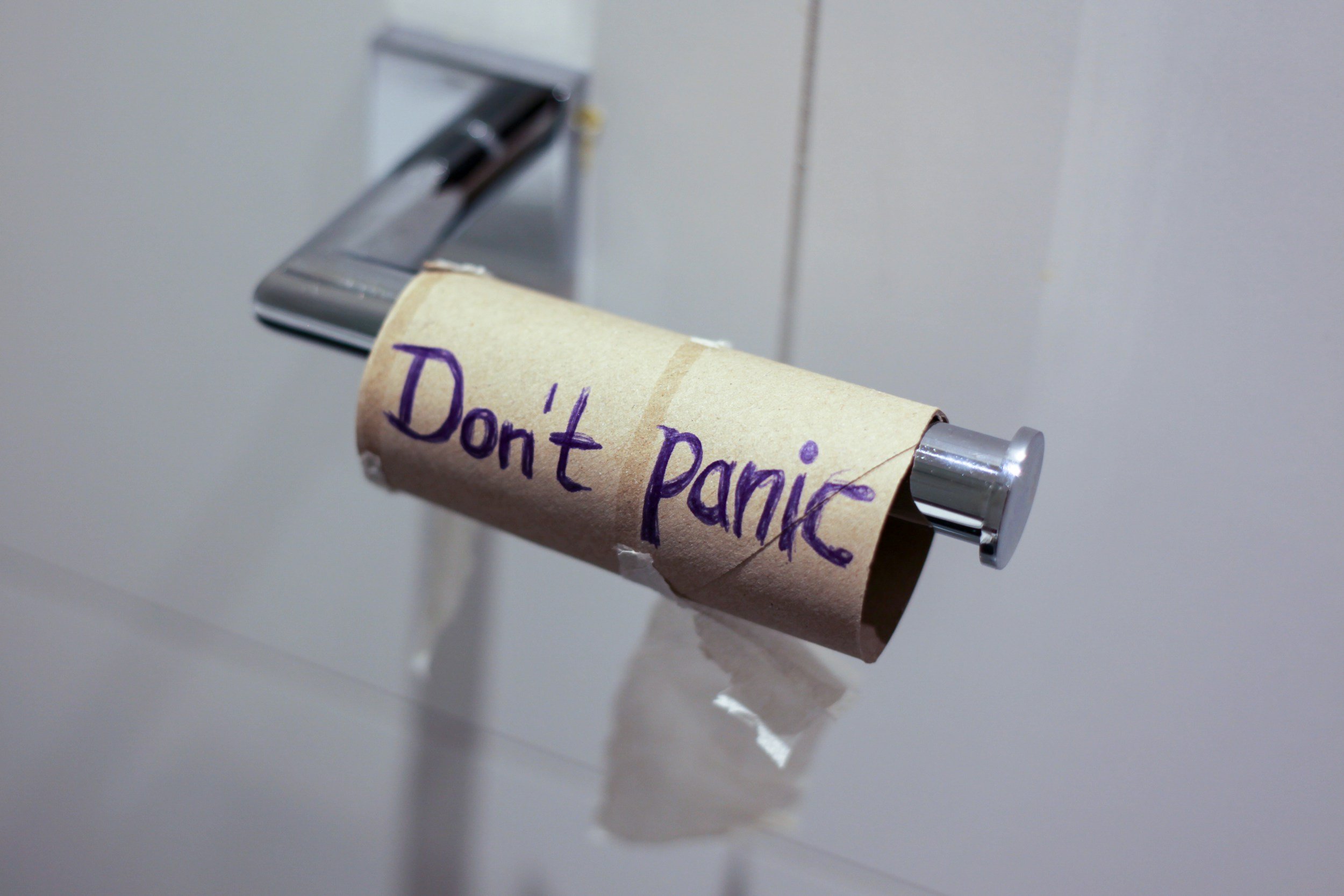
Do you ever find yourself worrying about where the nearest bathroom is?Avoiding certain places “just in case”?Or lying awake at night, hyper-aware of every sensation in your stomach?
If so, you’re not alone.
Many people who struggle with Irritable Bowel Syndrome (IBS) also experience anxiety—and in some cases, symptoms that closely resemble Obsessive-Compulsive Disorder (OCD).
This is not a coincidence. Research increasingly points to a powerful gut–brain connection, where digestive symptoms and anxiety-related processes reinforce one another.
How Common Is the Overlap?
IBS is a highly prevalent condition, affecting approximately 5–10% of the population worldwide (Black & Ford, 2020).
Among individuals with IBS:
Up to one-third experience anxiety or depression
Individuals with IBS have significantly higher odds (2–3x) of anxiety and depressive disorders compared to healthy controls (Fond et al., 2014)
When we look specifically at OCD:
IBS has been found in approximately 35–47% of individuals with OCD, compared to 2–5% in control groups (Koloski et al., 2012; Masand et al., 2006)
Around 15% of individuals with IBS meet criteria for OCD (Fond et al., 2014)
This highlights a meaningful bidirectional relationship between IBS and anxiety-related conditions.
Why Are OCD and IBS So Connected?
IBS is considered a disorder of the gut–brain axis, meaning communication between the digestive system and nervous system is altered.
Shared mechanisms include:
Heightened sensitivity to internal bodily sensations
Increased threat detection and anxiety
Difficulty tolerating uncertainty and discomfort
Stress reactivity that impacts gut motility and pain (Vasant et al., 2021)
In other words, both OCD and IBS involve how the brain interprets and responds to internal signals.
OCD-Like Features in IBS
Even without a formal OCD diagnosis, IBS can involve obsessive and compulsive patterns.
Obsessions (Intrusive Thoughts)
“What if I suddenly need a bathroom and can’t get to one?”
“What if I have an accident in public?”
“What if something is seriously wrong?”
Compulsions (Safety Behaviors)
Repeatedly checking for bathroom access
Mapping routes based on restroom availability
Avoiding travel, social events, or long meetings
Restricting food before leaving home
Leaving situations early “just in case”
These behaviors are completely understandable—but they can maintain the anxiety cycle over time.
Why Avoidance Makes IBS Anxiety Worse
Avoidance works in the short term by reducing anxiety.
But in the long term, it teaches your brain:👉 “This situation is dangerous.”
As a result, fear grows—and life can become increasingly restricted.
You might begin avoiding:
Social events
Work meetings
Travel
Dating
Even everyday errands
The Vicious Cycle
Physical sensation (e.g., stomach discomfort)
Catastrophic thought (“I won’t make it to a bathroom”)
Anxiety spike
Increased gut sensitivity and urgency
Avoidance or safety behavior
Short-term relief → long-term reinforcement
Over time, this cycle can significantly impact quality of life.
Evidence-Based Treatment: CBT for IBS and OCD
Cognitive Behavioral Therapy (CBT) is one of the most well-supported treatments for IBS, particularly when anxiety is present (Vasant et al., 2021).
CBT targets both:
Cognitive processes (how we interpret symptoms)
Behavioral patterns (avoidance, checking, safety behaviors)
1. Cognitive Restructuring: Reframing Catastrophic Thinking
Many individuals overestimate:
The likelihood of symptoms
The severity of consequences
Examples of helpful reframes:
“This would be uncomfortable—but I could cope.”
“Some uncertainty is unavoidable—and manageable.”
The goal is not reassurance, but flexibility and realism.
2. Exposure and Response Prevention (ERP)-Informed Work
IBS-related anxiety responds well to gradual exposure, similar to OCD treatment:
Going places without guaranteed bathroom access
Reducing checking behaviors
Eating previously avoided foods (when appropriate)
Staying in situations longer despite discomfort
Over time, this helps retrain the brain:👉 “I can handle this—even if it’s uncomfortable.”
3. Values-Based Action (ACT-Informed Work)
Many individuals begin organizing their lives around avoiding symptoms.
Treatment shifts the focus toward:👉 “What matters to me?”
This might include:
Relationships
Travel
Career goals
Enjoyment and leisure
Recovery involves taking meaningful, reasonable risks so life becomes guided by values—not fear.
Mindfulness and the Gut–Brain Axis
Mindfulness is a powerful, evidence-based approach for IBS.
Multiple randomized controlled trials have found that mindfulness-based interventions significantly reduce IBS symptom severity and improve quality of life (Gaylord et al., 2011; Henrich et al., 2020).
A meta-analysis further found that mindfulness:
Improves quality of life
Reduces pain
Decreases anxiety and depression in IBS (Zernicke et al., 2022)
Why Mindfulness Works
1. Reduces Reactivity to Sensations
Instead of:“This sensation is dangerous”You learn:“This is uncomfortable, but I can observe it.”
2. Interrupts the Anxiety Loop
Shifting from:Monitoring → reacting → escalatingTo:Observing → allowing → settling
3. Regulates the Nervous System
Slow, diaphragmatic breathing activates the parasympathetic nervous system, helping to:
Reduce gut sensitivity
Decrease urgency
Lower overall physiological arousal
Simple Mindfulness Exercise
Diaphragmatic Breathing (2–5 minutes):
Inhale slowly through your nose for 4 seconds
Let your belly expand (not your chest)
Exhale slowly for 6–8 seconds
Repeat while gently noticing sensations without judgment
Practice:
During calm moments (to build the skill)
During early symptom activation (to interrupt escalation)
You’re Not Alone—And Help Is Available
If you’re struggling with IBS and anxiety, or noticing OCD-like patterns, it’s not a sign that something is wrong with you.
It’s a sign that your brain and body are:👉 Trying (a little too hard) to protect you
With the right support—including CBT, exposure-based strategies, and mindfulness—it’s possible to:
Reduce anxiety
Feel more in control
Reconnect with your life
Treatment focuses on helping you take meaningful, manageable risks, so your life becomes guided by your values—not fear of IBS symptoms.
References
Black, C. J., & Ford, A. C. (2020). Global burden of irritable bowel syndrome: Trends, predictions and risk factors. Nature Reviews Gastroenterology & Hepatology, 17(8), 473–486. https://doi.org/10.1038/s41575-020-0286-8
Fond, G., Loundou, A., Hamdani, N., Boukouaci, W., Dargel, A., Oliveira, J., Roger, M., Tamouza, R., Leboyer, M., & Boyer, L. (2014). Anxiety and depression comorbidities in irritable bowel syndrome (IBS): A systematic review and meta-analysis. European Archives of Psychiatry and Clinical Neuroscience, 264(8), 651–660. https://doi.org/10.1007/s00406-014-0502-z
Gaylord, S. A., Palsson, O. S., Garland, E. L., Faurot, K. R., Coble, R. S., Mann, J. D., Frey, W., Whitehead, W. E., & Mann, J. D. (2011). Mindfulness training reduces the severity of irritable bowel syndrome in women: Results of a randomized controlled trial. The American Journal of Gastroenterology, 106(9), 1678–1688. https://doi.org/10.1038/ajg.2011.184
Henrich, J. F., Gjelsvik, B., Surawy, C., Evans, A., & Martin, M. (2020). A randomized clinical trial of mindfulness-based cognitive therapy for women with irritable bowel syndrome. Behaviour Research and Therapy, 131, 103639. https://doi.org/10.1016/j.brat.2020.103639
Koloski, N. A., Jones, M., & Talley, N. J. (2012). Evidence that independent gut-to-brain and brain-to-gut pathways operate in the irritable bowel syndrome and functional dyspepsia: A 1-year population-based prospective study. Alimentary Pharmacology & Therapeutics, 36(6), 592–600. https://doi.org/10.1111/apt.12005
Masand, P. S., Gupta, S., & Dewan, M. J. (2006). Irritable bowel syndrome and obsessive-compulsive disorder: A case-control study. Journal of Clinical Psychiatry, 67(5), 810–814.
Vasant, D. H., Paine, P. A., Black, C. J., Houghton, L. A., Everitt, H. A., Corsetti, M., Agrawal, A., Aziz, I., Farmer, A. D., Eugenicos, M. P., & Ford, A. C. (2021). British Society of Gastroenterology guidelines on the management of irritable bowel syndrome. Gut, 70(7), 1214–1240. https://doi.org/10.1136/gutjnl-2021-324598
Zernicke, K. A., Campbell, T. S., Blustein, P. K., Fung, T. S., Johnson, J. A., Bacon, S. L., & Carlson, L. E. (2022). Mindfulness-based stress reduction for irritable bowel syndrome: A systematic review and meta-analysis. Journal of Psychosomatic Research, 158, 110885. https://doi.org/10.1016/j.jpsychores.2022.110885